Transparent Film Wholesale: What to Consider Before Ordering
At first glance, all transparent rolls look similar. But in production, the difference becomes noticeable very quickly: one film runs consistently on the packaging line, another seals poorly, a third tears or deforms, while a fourth creates unnecessary condensation inside the package.
Therefore, a request for “transparent film wholesale” should not begin only with the question: “What is the price per kilogram?”
First, you need to understand exactly what you are buying: BOPP, CPP, or PE, what thickness is required, whether the material has a heat-sealing layer, whether printing will be applied, what roll parameters the equipment allows, and whether the product requires ventilation.
Artha-S works with BOPP, CPP, and PE, performs web slitting to the required parameters, flexographic printing, hot and cold perforation, folding into half-sleeve format, and production of finished bags.
Let us look at what needs to be checked before ordering a large batch.
What Is Actually Sold Under the Name “Transparent Film”
“Transparent packaging film” is not one universal material. Under this name, suppliers may offer BOPP, CPP, or PE, and they behave differently.
That is why comparing two offers only by price is incorrect. First, you need to compare the material, thickness, and technical characteristics.
BOPP Film
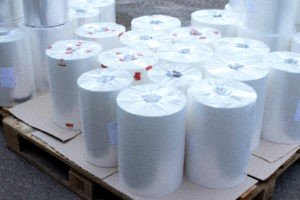 BOPP is biaxially oriented polypropylene film. It is a fairly rigid material with a characteristic “crisp” feel.
Its main properties are:
- high transparency;
- pronounced gloss;
- attractive appearance;
- high tear strength;
- barrier properties against vapor and gases;
- protection against foreign odors;
- suitability for flexographic printing;
- possibility of use for roll packaging and bag production.
The Artha-S product training specifies a BOPP thickness range of 15 to 40 microns.
BOPP is especially suitable where the packaging should present the product attractively on the shelf: high transparency and gloss make the product visually open to the customer.
At the same time, BOPP may have different structures: with a heat-sealing layer, without it, or with a surface activated for printing. This characteristic should be agreed before ordering.
CPP Film
CPP is non-oriented cast polypropylene film. Unlike the more rigid BOPP, it is more elastic.
Main properties of CPP:
- high mechanical strength;
- elasticity;
- good transparency;
- resistance to acids and fats;
- heat-sealing capability;
- suitability for printing;
- possibility of lamination;
- possibility of microperforation.
The CPP thickness used in this Artha-S segment is 15–40 microns.
This material should be considered when packaging requires not only transparency, but also elasticity and stable heat sealing.
PE Film
PE is polyethylene film. It is relevant where flexibility, mechanical durability, and moisture resistance are important.
LDPE is characterized by:
- high tensile strength;
- resistance to impact and tearing;
- impermeability to water and vapor;
- formation of strong welded seams;
- absence of its own taste and odor.
HDPE is characterized by high tensile strength and good resistance to fats and oils.
The Artha-S product training states that the company can work with PE in a range of approximately 25–100 microns, although the material itself is produced in a wider range of thicknesses.
PE should be considered for packaging where strength, water resistance, and loads during transportation are the main priorities.
Film Thickness: More Microns Does Not Mean Better
A common purchasing assumption is that thicker film is automatically better.
In practice, this is not the case.
Material that is too thin may:
- tear;
- deform;
- run inconsistently through equipment;
- fail to withstand the weight of the product.
Excessively thick film:
- increases material consumption;
- increases packaging cost;
- may be too rigid for specific equipment;
- does not always provide additional practical benefit.
Thickness should be selected based on:
- product weight;
- product shape;
- presence of sharp edges;
- bag type;
- packaging speed;
- sealing method;
- transportation conditions;
- load on the packaging.
It is also important not to confuse the thickness range of the material itself with the technical capabilities of a specific production operation.
For example, Artha-S slitting equipment works with materials 15–100 microns thick and 120–1200 mm wide. These are the parameters of the slitting operation itself, not universal characteristics of all film types.
Heat-Sealing Layer: Will the Film Seal Properly?
If the film is used on an automatic packaging machine, heat sealing becomes one of the key issues.
Transparent BOPP can have a special copolymer heat-sealing layer. It allows seams to be formed during packaging of the final product.
The heat-sealing layer may be applied:
- on one side;
- on both sides of the web.
This is critically important for equipment setup.
If the film is expected to automatically form a bag and seal, the technical specification should clearly indicate:
- whether a heat-sealing layer is present;
- which side it is applied to;
- which side comes into contact with the sealing elements;
- what sealing parameters the line uses.
Temperature, pressure, and sealing time should preferably be tested on the actual equipment before launching a large production batch.
Corona Treatment: If Printing Is Planned
The heat-sealing layer and corona treatment are different characteristics.
The heat-sealing layer is needed for sealing.
Activation is needed for printing.
In BOPP film, surface activation is performed using corona discharge. It helps printing ink adhere better to the surface of the material.
If you need to order activated film for printing, the specification should include:
- presence of activation;
- activated side;
- future printing side;
- roll winding direction.
This is especially important if printing and slitting are performed at different production stages.
Artha-S also provides flexographic printing on flexible materials — up to 8 colors.
Transparency Is More Than Just “Seeing the Product”
If a product is sold in transparent packaging, the quality of the film itself directly affects how the product is perceived.
Before approving a batch, it is worth evaluating:
- uniformity of transparency;
- absence of haze;
- optical distortions;
- gloss;
- foreign inclusions;
- scratches;
- folds;
- material odor;
- overall appearance of the packaging after filling.
BOPP is especially valued for its high transparency and gloss. Therefore, if the product must be clearly visible through the packaging, the appearance of the film becomes part of the product presentation.
Barrier Properties or Ventilation: What Does Your Product Need?
High airtightness is not always an advantage.
For grains, snacks, pasta, or grocery products, protection from external moisture and odors may be important. In such cases, the barrier properties of the film benefit the product.
But for products that release moisture, the situation is different.
For example:
- bread;
- greens;
- vegetables;
- floral products;
- other products with active moisture exchange.
Condensation may accumulate in completely closed packaging. In such cases, it is worth considering perforated film.
Artha-S performs two main types of perforation.
Hot perforation:
- hole diameter — 1 mm;
- material thickness — 20–55 microns;
- material width — 250–1000 mm;
- up to 4 lanes.
Cold euro perforation:
- hole diameter — 4–5 mm;
- material thickness — 20–80 microns;
- material width — 230–500 mm.
The choice of perforation depends on the product, package volume, packaging temperature, and required air exchange intensity.
Roll Parameters: What to Agree Before Ordering
This is where some of the most expensive mistakes often occur.
A roll may be made from the correct material and have the correct thickness, but still be incompatible with a specific packaging machine.
Before ordering, you need to agree on:
- web width;
- allowable width tolerance;
- thickness;
- outer roll diameter;
- inner core diameter;
- weight of one roll;
- required winding length;
- unwinding direction;
- inner and outer side of the material;
- winding tension;
- edge alignment;
- whether splices are acceptable;
- roll labeling;
- palletizing and packaging method.
Artha-S web slitting is performed specifically to obtain rolls with parameters required by a particular customer. The product training directly lists roll width, diameter, and weight among the main characteristics.
Technical slitting capabilities:
- material width — 120–1200 mm;
- thickness — 15–100 microns;
- up to 10 lanes;
- minimum width of one lane — 40 mm.
Will the Film Work on Your Packaging Line?
For Flow Pack, VFFS, HFFS, and other automatic equipment, saying “we need a 400 mm roll” is not enough.
It is advisable to provide the supplier with:
- Packaging machine model.

- Line type.
- Operating speed.
- Working sealing temperature.
- Forming unit width.
- Seal type.
- Material slip requirements.
- Core diameter.
- Maximum allowable roll diameter.
- Maximum allowable roll weight.
The film should not merely fit onto the machine. It must run consistently through the equipment, form the package properly, and create a reliable seal.
Therefore, before placing a large order, it is advisable to approve the specification and, if possible, perform a test run.
What Is Better to Order from One Manufacturer?
If the material is purchased from one company, printing is done by another, perforation by a third, and bags are produced by a fourth, the number of points where parameters may not match increases.
Artha-S can combine several operations within one order:
- film supply;
- slitting;
- flexographic printing up to 8 colors;
- hot perforation;
- cold euro perforation;
- folding into half-sleeve format;
- production of flat bags;
- production of cone-shaped bags;
- technical holes in finished bags.
Lamination is listed in the product training as a service performed through a subcontractor.
For the customer, an integrated approach means fewer risks of inconsistency between the material, printing, slitting, and the construction of the finished packaging.
What Documents to Request from the Supplier
For B2B purchasing, not only the physical quality of the film matters, but also documentary confirmation of its characteristics.
Before ordering, it is worth clarifying whether you can receive:
- technical specification;
- information about the material composition;
- thickness and allowable tolerances;
- test reports;
- food-contact documents, if required;
- confirmation of the quality management system;
- approved reference sample;
- batch labeling;
- traceability documents.
For food products and exports, documents should be checked specifically for the material and intended use scenario ordered by the company.
Artha-S reports a DSTU ISO 9001:2015 quality management system, as well as laboratory testing of CPP and BOPP film. For a specific order, the list of available documentation should be agreed with the manager.
MOQ: From What Volume Does a Wholesale Order Start?
Artha-S internal commercial policy includes the following guidelines:
- transparent film — from 20 kg;
- transparent perforated film — from 50 kg;
- transparent film with euro perforation — from 50 kg;
- printed film — from 100 kg.
However, MOQ should preferably be clarified for the specific configuration. Material, number of colors, slitting, perforation, and other operations may affect the economics of the order.
For regular purchasing, it is also useful to agree on:
- forecast monthly consumption;
- delivery schedule;
- size of one batch;
- possibility of splitting a batch into several shipments;
- safety stock.
This makes it possible to move from a one-time “buy transparent film” request to a controlled supply system.
Table: What to Check Before Ordering
| What We Check | Why It Matters | What to Specify in the Order |
|---|---|---|
| Material | BOPP, CPP, and PE have different properties | Product type and packaging method |
| Thickness | Affects strength, rigidity, and cost | Value in microns |
| Heat-sealing layer | Determines whether sealing is possible | Presence and side |
| Activation | Required for high-quality printing | Activated side |
| Roll width | Must match the equipment | Width and allowable tolerance |
| Core and diameter | Determine machine compatibility | Core diameter and roll diameter |
| Winding | Affects operational stability | Direction and side |
| Perforation | Provides the required air exchange | Type, diameter, and hole zone |
| Printing | Affects material and surface preparation | Number of colors |
| Documents | Confirm material characteristics | Required specifications and test reports |
| MOQ | Affects inventory and economics | Planned volume |
| Lead time | Determines production planning | Required delivery date |
Checklist for Calculating Transparent Film
This list can be copied and sent directly to an Artha-S manager:
- Product name and type.
- Weight or volume of one package.
- Manual or automatic packing.
- Packaging line model.
- Material: BOPP, CPP, or PE.
- Required thickness.
- Web width.
- Core diameter.
- Maximum roll diameter.
- Maximum roll weight.
- Whether a heat-sealing layer is required.
- Whether activation for printing is required.
- Whether perforation or technical holes are required.
- Whether printing is required and how many colors.
- Unwinding direction.
- Required volume in kilograms.
- Desired delivery date.
- Whether documents for food contact or export are required.
FAQ
Which Transparent Film Is Better — BOPP or CPP?
There is no universally better option. BOPP is more rigid, glossy, and visually attractive. CPP is more elastic, heat-seals well, and is suitable for applications where mechanical flexibility is important.
How Do You Choose Film Thickness?
You need to consider product weight, shape, sharp edges, packaging method, seal type, packaging line speed, and transportation conditions.
Does Transparent BOPP Always Have a Heat-Sealing Layer?
No. BOPP may be supplied with or without a heat-sealing layer. Its presence and side must be specified in the technical specification.
Why Is Corona Treatment Needed?
It improves the ability of the surface to hold printing ink. If flexographic printing is planned, the activated side should be specified.
Can a Roll Be Made for a Specific Packaging Machine?
Yes. You need to provide the manufacturer with the width, core parameters, maximum allowable roll diameter and weight, unwinding direction, and other equipment characteristics. Artha-S provides custom web slitting.
When Is Perforated Film Needed?
When a product requires moisture release and air exchange. Artha-S provides 1 mm hot perforation and 4–5 mm cold euro perforation.
What Is the Minimum Wholesale Order?
Artha-S guideline for standard transparent film is from 20 kg, for perforated film from 50 kg, and for printed film from 100 kg. The final MOQ depends on the order configuration.
What Documents Should Be Requested for Food Packaging?
A technical specification, information about the material, necessary test reports, and documents confirming suitability for the specific food-contact scenario.
Conclusion
A wholesale order for transparent film is much more than choosing a price per kilogram.
The correct sequence looks like this:
product → equipment → material → thickness → heat-sealing layer → roll parameters → ventilation → printing → documents → production run.
BOPP, CPP, and PE have different properties, and even the same film can behave differently depending on thickness, winding, heat-sealing side, and packaging machine settings.
That is why Artha-S offers not only transparent film wholesale, but also additional operations: custom roll slitting, flexographic printing up to 8 colors, perforation, and production of finished bags.