In the modern business world, particularly in the agro-industrial sector and retail, the importance of proper packaging cannot be overstated. Bags for greens are not only essential for preserving product freshness but also play a key role in logistics and marketing. This article will explore how to properly choose bags for greens, their types, features, and the advantages they bring to your business.
Types of bags for greens:
- Straight bags: These have a standard rectangular shape, making them a versatile option for packaging various types of greens. They are easy to fill and convenient for storage.
- Cone bags: These bags are characterized by their cone-like shape. This design is ideal for packaging bulky or large types of greens, such as lettuce or spinach, ensuring optimal distribution of the product inside the packaging.
- Sheet packaging: This type of packaging consists of flat sheets that can be formed around the product, providing a tight and protective layer. They are suitable for packaging small greens like dill or parsley and offer excellent visual presentation of the product.
Each of these types of bags has its advantages and is suitable for certain types of greens, ensuring optimal preservation and presentation of the product.
Key characteristics of bags for greens include:
- Materials: Various types of polymer films are used, including BOPP film (biaxially oriented polypropylene film), and CPP (cast polypropylene), which are characterized by high transparency, gloss, and tear resistance.
- Material thickness: Varies from 30 to 40 microns, depending on the type of film.
- Perforation: Bags may have micro or macro perforation, providing the necessary ventilation to preserve product freshness. Perforation, performed with hot needles or cutting tools, creates holes of various sizes for air exchange inside the packaging. This is critical for maintaining the quality and freshness of greens.
- Anti-fog film prevents condensation, keeping the product visually attractive and fresh. Such technical solutions increase the shelf life of products and enhance their presentation.
These parameters determine how long products will retain their freshness and how they will look in the packaging.
The stages of production of bags for greens include the following processes:
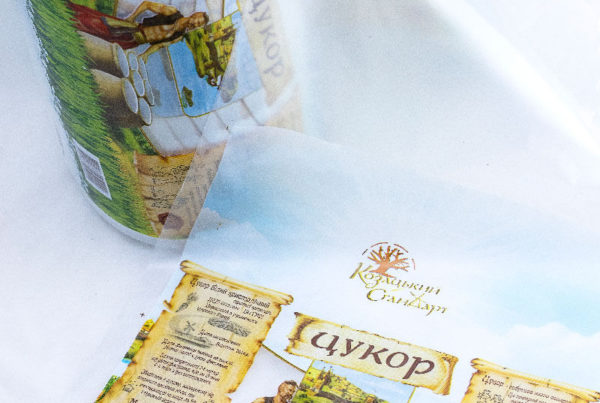
- Flexographic printing: Used for applying images and text to the film. Advantages of flexography include a wide choice of media types, the ability to print on different material thicknesses and eco-friendliness.
- Lamination if necessary: The process of coating printed products with film to protect the goods from external factors, improve the appearance of the packaging, and increase barrier properties.
- Perforation: Piercing the fabric with a hot needle or cutting tools to create air exchange inside the packaging.
- Rolling into a half-sleeve: Fold the fabric in half followed by rolling into a roll.
- Bag production: The process of creating bags by sealing side seams and, in some cases, the bottom of the bag.
The advantages of not applying images on the bag include the following aspects:
- Brand Development: Unprinted bags can contribute to brand recognition through unique packaging design or shape. This allows companies to stand out in the market, not relying solely on printed materials.
- Consumer Engagement: Clean, unprinted bags can attract consumer attention to the product itself, rather than the appearance of the packaging. This helps focus attention on the quality and freshness of the product.
- Attention Attraction: Using simple yet elegant packaging solutions can attract consumers who desire minimalism and eco-friendliness in the products they purchase.
These aspects help strengthen the company’s market position, creating a unique image and maintaining a high level of consumer interest.
Technical capabilities:
- Maximum material width (half-sleeve) – 600 mm
- Maximum material width (fabric) – 1000 mm
- Minimum material width (half-sleeve) – 100 mm
- Maximum material thickness – 60 microns
- Minimum material thickness – 20 microns
Additional elements of the bags:
- Bottom gusset/fold – These bags are equipped with a special gusset at the bottom, known as a bottom fold. The width of the gusset varies from 2 cm to 5 cm, depending on the material.
- Technical hole – A hole 8 mm in size is designed for the release of air and moisture. The maximum number of holes is eight.
- Reinforced seam – used for the production of bags with increased requirements for the resistance of side seams to tearing.
Euroslot (euro loop) – part of the bag, separated from the main part with a seal, widely used for displaying goods in supermarkets.
These technical capabilities allow companies to be flexible in meeting customer needs and creating individual packaging solutions.
Reinforcing tape – used to strengthen the euro slot.
Production technology – when manufacturing the bag, the tape is automatically inserted between the layers of the film.
Flap – the protrusion of the fabric (back of the bag) above the main part of the bag.
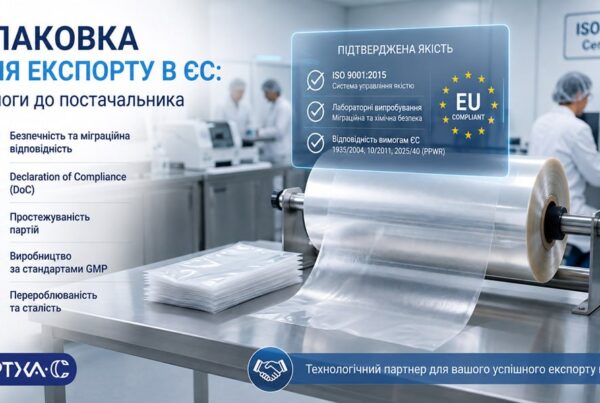
“ARTHA-S” company has significant experience in the production of bags for greens, using advanced materials and technologies. They specialize in the production of BOPP film bags, distinguished by high transparency, elasticity, and tear resistance. The company applies various printing technologies, including flexographic printing, and offers a variety of bag types – transparent, perforated, with an anti-fog effect. They also offer a wide range of sizes and types of bags, meeting specific customer needs. To date, our company has captured 60% of the packaging market, proving our leadership and expertise in this field.