
In today’s world, packaging plays a key role in presenting and preserving goods. In light of this, flexographic printing stands out as an advanced technology that offers numerous advantages for various industries, especially in the agro-industrial sector.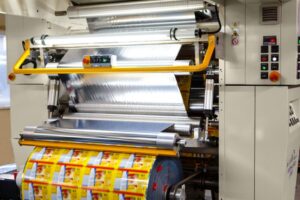 This article takes a detailed look at flexographic printing, its unique features, comparisons with other types of printing, and its impact on the packaging industry.
Flexographic printing is a modern printing method that uses flexible relief polymer plates to apply ink to various materials. This process allows for printing on paper, cardboard, plastic, metal foils, and even non-woven materials. Thanks to its versatility and high productivity, flexographic printing has become popular in the packaging industry, particularly for labels, food packaging, and other goods. This method provides high-quality imaging, the ability to quickly reconfigure for different tasks and efficient production.
Flexographic printing differs from other types of printing, such as offset and digital printing, in the following key features:
- Flexibility of materials: Flexography can print on a wider variety of surfaces, including plastic, foil, paper, and cardboard.
- Use of flexible plates: Flexo uses flexible relief plates to apply ink, allowing for high-quality printing on uneven surfaces.
- Speed and productivity: Flexographic printing is often faster and more efficient than other types of printing, especially for large volumes.
- Print quality: Flexographic printing provides bright, clear images, particularly useful for packaging and labels.
- Cost-effectiveness: Lower material and operation costs compared to some other printing technologies.
Disadvantages of flexographic printing include:
- Complexity of setup: Requires high precision in settings, which can be time-consuming.
- Technical limitations: Some complex designs may be difficult to reproduce with high quality due to the limitations of flexographic plates.
Modern trends in flexographic printing include:
- Use of environmentally friendly inks: The growing demand for eco-friendly products leads to the use of water-based and UV inks.
- Digital technologies: Integration of digital technologies for more accurate and flexible printing.
- Improved print quality: Technological progress allows for higher image quality.
- Process automation: The use of automated equipment to increase productivity and reduce production costs.
These trends indicate the dynamic development of flexographic printing and its adaptation to the changing needs of the market.
The company “ARTHA-C” has significant experience in the field of flexographic printing. It specializes in producing high-quality packaging using advanced flexographic printing technologies. The company’s main mission is to provide clients with effective and innovative packaging solutions that not only look attractive but also preserve the quality of the products.
Flexographic printing plays an important role in the modern packaging industry, providing flexibility, high quality, and efficiency. Despite certain challenges, such as the high cost of equipment, this technology continues to adapt to the changing needs of the market through ecological innovations and digital integration. The company “ARTHA-C” uses these advantages of flexographic printing to create high-quality packaging, demonstrating its expertise and commitment to innovation and quality in all its products.


