Bread Bags: Convenience and Hygiene in Every Package. These are not just words but a promise of quality and reliability from a company that understands the importance of every aspect of bread packaging. In today’s world, where attention to detail and food storage requirements are becoming increasingly stringent, choosing the right solution for bread packaging plays a key role in ensuring its freshness, taste, and safety for consumers. Bread bags from “ARTHA-S” are a step towards ensuring that every product is delivered to the consumer in the best possible condition. The use of advanced technologies and materials allows us to offer a wide range of bread packaging that meets the needs of the most demanding customers. Our packaging provides not only convenience and hygiene but also meets high standards of eco-friendliness and food safety. In this article, we will talk about the variety of bread packaging types we offer, the materials they are made from, and the advantages of our products. By covering topics from types of perforation to the use of polymer materials, we will help you understand why bread bags from “ARTHA-S” are the ideal solution for ensuring convenience and hygiene in every package. Bread packaging is available in various types, allowing manufacturers to choose the optimal solution according to their needs. The main types of bread packaging include:
- Micro and macro perforated bags: These bags have small holes (micro-perforation) or larger holes (macro-perforation) that allow air to circulate inside the packaging, reducing condensation and helping to maintain bread freshness. Micro-perforation provides better control over humidity inside the package, while macro-perforation ensures a more intensive air exchange.

- Bags with and without perforation: Bags without perforation provide complete retention of moisture and aroma inside the packaging, which is especially important for preserving bread’s softness. Meanwhile, bags with perforation allow moisture to escape, which can help prevent mold and extend the product’s shelf life.
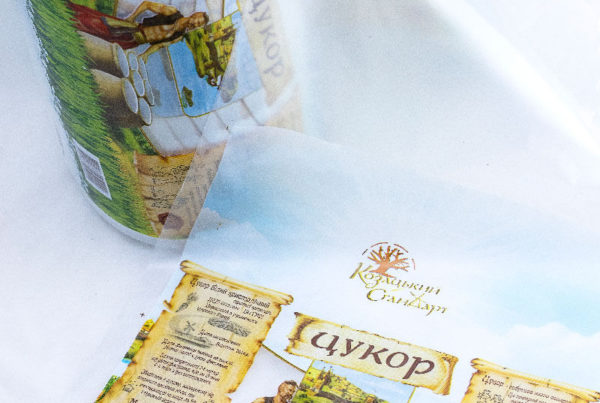
- Roll packaging transparent and with printed designs: This packaging comes in large rolls and can be cut to individual sizes for a specific product. Printed designs on such packaging not only attract consumers’ attention but also allow manufacturers to use packaging as a marketing tool, providing information about the product, brand, and other marketing messages. Each type of packaging has its advantages and is designed to meet the specific needs of the product and the market. The choice between them depends on factors such as shelf life, aesthetic requirements, cost, and environmental impact.
Materials such as BOPP (biaxially-oriented polypropylene) and CPP (co-polymer polypropylene) are widely used for bread packaging for several reasons, including their unique properties and benefits:
- Mechanical strength: These materials have high mechanical strength and resistance to tearing and punctures, providing reliable protection for the product during transportation and storage.
- Transparency and gloss: BOPP and CPP materials have high transparency and gloss, making the packaging attractive on the store shelf and allowing consumers to see the product without opening the package.
- Heat-sealability: These materials can be easily sealed with heat, effectively hermetizing the packaging, providing additional protection from external factors, and helping to preserve product freshness.
- Cost-effectiveness and availability: Compared to other packaging materials, BOPP and CPP are relatively economical solutions, making them accessible to bread manufacturers of various scales.
- Resistance to chemical agents: These materials are resistant to many chemical substances that may be present in food products, as well as the effects of fats and oils found in some types of bread. Due to these properties, BOPP (20-25 microns) and CPP (23-25 microns) have become popular choices for bread packaging, allowing for an extension of its shelf life, maintaining high product quality, and ensuring its attractive appearance for consumers.
In the context of bread packaging, manual and automatic processes have their differences, which affect the choice of packaging type used for each method. Manual Packaging Processes Manual packaging processes for bread rely on human labor to handle and package bakery products. This method is often used in small bakeries or for special, limited production series where great attention is paid to details or individual packaging design. Manual packaging allows for greater flexibility in choosing packaging, as it is not limited by machine equipment. However, it can be more labor-intensive and less efficient in terms of production. For manual packaging, the following types of packaging can be used:
- Transparent polypropylene bags.
- Polypropylene bags with perforation.
- Polypropylene bags with printing. Automatic Packaging Processes Automatic packaging processes use specialized equipment for fast and efficient packaging of large volumes of bakery products. These processes minimize human involvement and
 increase productivity while simultaneously ensuring high-quality packaging. Automation requires the use of more complex types of packaging. Types of packaging suitable for automatic packaging:
 - Polypropylene bags gathered on a flap (perforated, with printing).
- Roll packaging (perforated, with printing). Each packaging method has its advantages and disadvantages, which should be considered in the context of specific production needs. Manual packaging does not require equipment but will be slower and more expensive. Automatic packaging provides speed and efficiency but requires significant initial investments in equipment and may be limited in terms of packaging design. Perforated packaging, printing, and the use of polymer materials in bread packaging have several advantages that significantly improve the storage, presentation, and sale of bakery products. Here are more details on each aspect: Perforated Packaging
 Improved Ventilation: Perforation allows air to circulate inside the packaging, reducing the risk of moisture condensation, which can lead to mold.
- Freshness Preservation: Proper ventilation helps maintain bread freshness for a longer period, preserving its aroma and taste.
- Consumer Attractiveness: The ability to see the product through perforations without opening the packaging increases consumers’ trust in the product. Printing on Packaging
- Marketing and Branding: High-quality printing on packaging serves as an important marketing tool, allowing the product to stand out on the shelf and providing important information about the product and brand.
- Product Information: Packaging can contain information about the composition, shelf life, and storage method, increasing consumer trust and satisfaction. Use of Polymer Materials
- Long Shelf Life: Polymer materials provide good protection from external influences such as moisture, oxygen, and microorganisms, extending the bread’s shelf life.
- Lightness and Strength: Polymer packaging offers high strength at minimal weight, simplifying transportation and distribution. These technologies not only enhance the attractiveness of bakery products for consumers but also contribute to preserving their quality and extending their shelf life, which is important for manufacturers, retailers, and consumers.
Using modified atmosphere (MA) and laminated roll packaging are effective methods for extending the shelf life of bread, as they address the main causes of bread spoilage. These methods impact the preservation of freshness, taste, aroma, and microbiological stability of bread. Here is how each of these methods contributes to extending the shelf life: Modified Atmosphere (MA)
- Control of Gas Composition: Modifying the atmosphere inside the packaging by regulating levels of oxygen, carbon dioxide, and nitrogen can significantly slow down oxidation and microbial growth. Reducing oxygen levels decreases the growth of aerobic microorganisms and mold, while increasing carbon dioxide content has a bacteriostatic effect that inhibits the growth of bacteria.
- Reduction of Moisture Loss: Maintaining an optimal level of humidity inside the packaging prevents bread from drying out, helps preserve its soft texture, and prevents staling.
- Extension of Freshness: MA helps preserve the organoleptic properties of bread, including taste, aroma, and texture, for a longer period. Laminated Roll Packaging
- Barrier Properties: Laminated materials provide high barrier protection against oxygen, moisture, and other external factors that can lead to spoilage. This helps preserve the quality of bread, preventing fat oxidation and reducing moisture loss.
- Mechanical Protection: Laminated packaging also provides physical protection from mechanical damage during transportation and storage, preserving the shape and integrity of the bread.
- Extension of Shelf Life: The combination of barrier properties and protection from microbial growth allows for a significant extension of the shelf life of bakery products without losing their consumer qualities. Combining these two methods creates optimal conditions for storing bread, significantly extending its freshness and protecting it from factors that contribute to spoilage. The equipment used in the production of bread packaging includes a variety of machines and systems for printing, laminating, cutting, and forming bags. Among them:
- Printing machines: These machines allow for the application of logos, product information, barcodes, and other important information on the packaging. Printing can be performed using various methods, including flexographic, offset, and digital printing.
- Laminating machines: Lamination helps improve the mechanical properties of packaging, its barrier properties (e.g., against oxygen and moisture), and its aesthetic appearance. Lamination can involve the use of different materials, such as film, foil, or paper.
- Cutting and sealing machines: These machines are used to form a specific shape of packaging from large rolls or sheets of material, as well as to glue different parts of the bags.
- Packaging machines: Once the packaging is formed, it can be used for automatic bread packaging. These machines can automate the packaging process, weighing, and labeling of products. Potential clients ordering bread packaging should know the following:
- Product Specifications: Clearly specify the size, shape, packaging material needed, and any special requirements for barrier properties or printing.
- Edition and Deadlines: Discuss the minimum order quantity and expected production timelines to ensure timely delivery.
- Quality Requirements: Ensure that the manufacturer can provide high-quality printing and materials that meet your standards.
- Cost: Consider the cost of development, production, and delivery of packaging, as well as the possibility of ordering trial batches for testing before placing a large order. Considering these aspects, you can ensure that the bread packaging will not only be functional and attractive but also optimal in terms of cost and production capabilities. Standard production times for bread packaging depend on the type of packaging, order volume, and design requirements. According to the provided information, the terms can vary:
- The standard production time is about 14-21 working days after confirming the order and design. This period may be longer for complex orders or orders with a large number of special requirements.
- Production times for express orders can be shortened, but this depends on the current production load and the specifics of the order. Express production usually involves an additional fee for speeding up the process. It is important to consider that the final deadline may depend on many factors, including:
- Design Complexity: More complex designs may require additional time for preparation and production.
- Order Volume: Large orders may require more time for production compared to smaller batches.
- Material Availability: Delays in raw material deliveries can also affect the overall production time.
- Design Approval Time: The period between submitting the design and its confirmation by the client also affects the overall production schedule. For more accurate terms, it is recommended to contact the manufacturer or packaging supplier directly, as they can provide detailed information, taking into account all the specific conditions of the order. In a world of constant evolution in the food market, bread packaging plays a key role in ensuring convenience, hygiene, and long-term storage of products. From choosing materials and packaging types to understanding production processes and technologies – every element is important for bread manufacturers, as well as for companies engaged in greenhouse cultivation or packaging of greens. We have reviewed a variety of packaging options available on the market, including micro and macro perforated bags that allow the product to “breathe,” ensuring its freshness for a longer period. We also focused on the importance of choosing materials such as BOPP and CPP for optimal protection and presentation of products. Automation of packaging processes plays an important role in increasing production efficiency, allowing not only to optimize production lines but also to ensure high-quality packaging. Perforated packaging, laminated materials, and modern printed designs not only extend the shelf life of products but also make them more attractive to the consumer. Understanding production standards and the necessary equipment for creating quality packaging is key for any business aiming for success in the market. Potential clients should be informed about technological capabilities and packaging requirements to make the most effective use of its potential. In conclusion, innovative solutions in the field of bread packaging open new opportunities for business, contributing to the preservation of quality, extending the shelf life of products, and improving their presentation. Given this, companies that grow flowers, own greenhouse complexes, or sell packaged greens should consider modern packaging as a strategic tool for developing their business and ensuring high consumer satisfaction