Bread bags: how to keep a soft crumb and a crispy crust
Bread is a “living” product. After it comes out of the oven, it keeps releasing heat and moisture for a while, and the crumb and crust continue to “work”: the crumb wants to stay tender, while the crust wants to remain crispy. And that’s where the classic problems begin: a loaf in a foggy bag, the crust turns soft like a bun, or наоборот — the bread dries out quickly and feels “stale” the next day. Even worse is excess moisture inside the bag — then mold arrives before the customer does.
So how do you make bread packaging help preserve both a soft crumb and a crispy crust? Let’s break it down: what films are used for bread bags, which formats work best, when perforated bread bags are needed, and what you can do today to reduce write-offs and improve shelf appearance.
Why bread suffers in the “wrong” bags
After baking, bread releases steam. If you pack a still-warm product into a fully hermetic film, water vapor has nowhere to go — it condenses on the inside walls of the bag. That creates a “greenhouse effect”: warm + moist inside, the crust softens, and microflora gets ideal conditions. The result is loss of crunch and faster mold growth.
But there’s the opposite extreme too. Overly “breathable” packaging or the wrong material can make bread release moisture too quickly: the crumb dries out, aroma weakens, and the feeling of freshness disappears within 1–2 days.
Conclusion: you need balance. Material + perforation + format create the right microclimate inside the bag — and that directly affects how to keep bread soft and how to keep the crust crispy.
Film types for bread packaging
BOPP film — the clear “classic” for bread
BOPP (biaxially oriented polypropylene) is the well-known “stiff, crispy” material you often see on shelves as clear bags. It offers excellent transparency and gloss, strong visual appeal, high tear strength, and good barrier properties against vapor, gases, and foreign odors. It’s also inert and safe for food contact.
For bread, this means:
- customers can clearly see the product (appetizing look = better shelf choice);
- bags don’t tear during packing and transportation;
- bread looks “fresh” and neat longer.
A key production note: clear BOPP can include a heat-sealable copolymer layer (coextruded), which ensures strong seals so the package doesn’t “open up” during packing.
CPP film — flexible and resistant to fats
CPP (cast polypropylene) is a more elastic, “soft-rustling” film. It has high mechanical strength and transparency, improved resistance to acids and fats, seals well, prints well, and can even be microperforated — which allows packing products while they’re still warm.
CPP often fits bread and bakery needs when:
- you pack enriched/fatty products (croissants, puff pastry, filled buns);
- you need higher film flexibility;
- the packaging must handle a more demanding packing process.
Polyethylene film (LDPE / HDPE) — strength and protection
Polyethylene is a strong, “workhorse” material often used for simple bags or as outer/transport packaging.
- LDPE has very high tensile strength, excellent impact and tear resistance, blocks water and vapor, resists acids and alkalis, and is neutral in odor.
- HDPE is also strong in tension, has low water permeability, and good resistance to fats and oils (but lower impact resistance than LDPE).
For bread, remember: polyethylene without perforation can “seal in” moisture — increasing the risk of condensation and a greenhouse effect. That’s why the right bag format and ventilation are especially important here.
Flexible roll stock for bread
Flexible roll stock is a single- or multi-layer laminate (polymer structure), printed or unprinted, used on vertical or horizontal packaging lines.
Its strengths for manufacturers:
- low weight (cost-efficient logistics and storage);
- strength and barrier protection (against moisture, oxygen, odors);
- premium presentation and full-surface printing with easy design changes.
For bread, roll stock is convenient on high-speed lines: sliced bread, bread snacks, croutons — especially where a stable packing process and predictable shelf life matter.
Bag formats for bread
Flat (straight) bags
A flat/straight bag is a flat rectangular or square pack with three or four perimeter seals.
Why polypropylene bread bags (BOPP/CPP) are so popular:
- characteristic gloss and high transparency — attractive shelf look;
- resistance to external environment and chemicals;
- strong seals and reliable performance;
- consistent dimensions tailored to your product.
Suitable for: whole loaves, sliced bread, buns, lavash — depending on film choice and ventilation.
Bottom-gusset bags
A bottom gusset is a fold at the bottom of the bag (usually 2–5 cm) that increases volume; when filled, the bag gains shape and becomes more stable.
For bread, it’s useful when:
- you pack large loaves or pan bread;
- you sell bun assortments or sets;
- you want packaging that stands neatly on the shelf instead of collapsing.
Perforation and technical holes: letting bread “breathe”
What perforation is
Perforation means making holes in the film (hot needle perforation or cold cutting perforation) to create air exchange inside the pack.
ARTHA-S has equipment for:
- hot perforation: material width up to 1000 mm, thickness 20–55 μm, hole diameter 1 mm, up to 4 lanes;
- Euro perforation (cold): holes 4–5 mm, width up to 500 mm, thickness 20–80 μm.
Technical holes in bread bags
Technical holes are 8 mm holes designed to release air and moisture. A flat bag can have up to 8 of them.
What this gives bread (and you as a producer):
- stronger air exchange;
- less condensation;
- better microclimate in the bag → longer quality retention, fewer write-offs.
When perforation is critical
- If you pack bread while it’s still warm: perforation reduces “greenhouse” effects and fogging.
- If you sell crusty baguettes: small holes help keep crispness without drying the crumb “to zero.”
- If you make long-shelf-life croutons/snacks: perforation may be minimal or unnecessary — barrier protection matters more to prevent moisture uptake.
Storage hacks: how to extend bread freshness in bags
 Don’t pack bread straight from the oven
If you seal hot bread in hermetic film, condensation is almost guaranteed. Let it cool and “steam off” a bit so excess vapor doesn’t turn into droplets inside the bag. This simple step often saves the crust.
Match the film to the product
- Classic loaves and pan bread: clear BOPP or polypropylene bags with optional technical holes.
- Enriched/fatty bakery: CPP handles fat contact better and tolerates packing conditions; microperforation can help with warm packing.
- Croutons and bread snacks: roll stock with higher barrier properties is often more effective (moisture protection).
Don’t cut corners on thickness and seals
Thin film and weak seals lead to tears, open packs, lost product, and headaches. For higher loads, a reinforced seal helps: an additional dotted seal parallel to the main seal increases tear resistance and reduces packing defects.
Use packaging design as a “freshness instruction” for customers
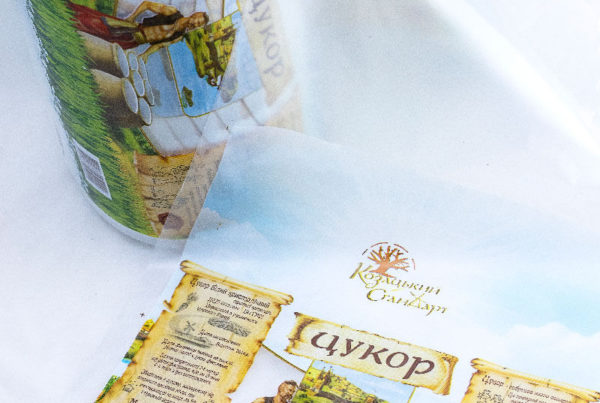
You can print not only a logo, but also practical prompts: “how to store,” “best before,” “don’t leave in the sun,” etc. Flexographic printing on roll materials is possible up to 8 colors — making packaging both marketing and a freshness guide.
ARTHA-S capabilities for bread films and bags
ARTHA-S works with bread-category materials: BOPP, CPP, LDPE, HDPE, and single-/multi-layer laminates for flexible roll stock.
Key technical capabilities:
- slitting: up to 1200 mm, thickness 15–100 μm, up to 10 lanes, min lane width 40 mm;
- hot perforation: width up to 1000 mm, thickness 20–55 μm, 1 mm hole, up to 4 lanes;
- Euro perforation: width up to 500 mm, thickness 20–80 μm, 4–5 mm holes;
- bag production: flat/straight bags (half-tube up to 600 mm, web up to 1000 mm, thickness 20–60 μm) + options: bottom gusset, technical holes, reinforced seal, euro-slot, reinforcement tape, flap;
- flexo printing: up to 8 colors, roll-to-roll printing.
Minimum order quantities help test solutions without huge volumes: clear film from 30 kg, clear perforated/euro-perforated film from 50 kg, printed film from 200 kg; clear flat bags from 30 kg, printed bags from 200–300 kg.
Why choose ARTHA-S for bread packaging
There is no single “perfect” bread bag for every case: a loaf, baguette, rich bun, and croutons have different moisture, crust, and shelf-life needs. ARTHA-S’s strength is combining material, format, perforation, and printing for a specific product — not just selling “what’s available”.
What you get: stable packaging quality, fewer write-offs thanks to the right microclimate, better shelf presentation, and branded packaging options — plus flexible minimum quantities.
Describe your bread types, packing method, and storage conditions — and we’ll recommend films and bags that help preserve a soft crumb and a crispy crust until the moment of purchase.