Why cone bags are the industry standard in floristry (especially in wholesale)
In floristry, a cone is not “a shape for the sake of shape” — it’s a practical tool. Cone sleeves for flowers give petals more space, reduce the risk of damage during transport, and make bouquets look more premium at point of sale. In wholesale, cones also mean speed: a packer takes a sleeve, inserts the bouquet, secures it — and the batch is ready with minimal handling and less waste.
Where cone bags work best:
-
cut flowers (tulips, roses, seasonal mixes);
-
large bouquets and arrangements with delicate petals;
-
packaging for potted flowers (especially with a sealed bottom for cleaner logistics).
Which film to choose: BOPP or CPP (simple explanation)
BOPP for flowers
If you need a “showcase effect” for retail, BOPP film for flowers is the most common choice. It is transparent, glossy, strong, and holds shape well — bouquets look neat even after transport. Typical BOPP variants include: clear, white, pearl, metallized, matte. A common material thickness range is 15–40 microns.
Important wholesale nuance: cone sleeves are typically produced from BOPP without a heat-seal layer — this is a standard solution for making cone bags for flowers, because it keeps the attractive stiffness and clarity while remaining easy to form into a cone.
CPP as an alternative
CPP is a more elastic and “softer” film. It’s chosen when you need extra flexibility or a different tactile feel. The common thickness range is also 15–40 microns.
A practical advantage of CPP is that it can support microperforation — useful when the pack may face higher moisture and you want mild ventilation (in floristry — selectively and only when needed).
How to choose film thickness for your bouquets
The key rule is simple: the larger the bouquet and the tougher the logistics, the higher the thickness. But bigger is not always better: overly thick film increases cost and can slow down packing.
A practical benchmark often used in floristry is 30–40 microns — a balance of strength and flexibility for transport and retail display.
Recommended guidance table (best-practice ranges, not rigid “standards”):
| Scenario | Recommended thickness | Why it works |
|---|---|---|
| Tulips (dense bunch, fast turnover) | 25–35 µm | Strong enough, quick packing, great shelf look |
| Roses (long stems, higher petal damage risk) | 30–40 µm | Holds shape better, fewer creases during logistics |
| Mixed bouquets with voluminous blooms | 35–40 µm | Larger volume + delicate petals → extra strength |
| Potted flowers (gift plants) | 35–40 µm | Stability, fewer tears, cone keeps shape |
Cone bag format: how to choose dimensions (top/bottom/height)
Cone sleeves are not chosen “by eye” — they are defined by four parameters: top width, bottom width, height, and film thickness.
Typical custom ranges used in the market and in Artha-S practice:
-
bottom width: 50–200 mm
-
top width: 170–700 mm
-
height: 200–1000 mm
-
materials: BOPP/CPP, thickness typically 25–100 µm (for flowers, extreme values are rarely needed; 30–40 µm is the common working range)
Examples (as practical references):
-
Packaging for tulips: narrower bottom + medium top width, so bunches stay compact and straight.
-
Packaging for roses: greater height and wider top width to protect petals and leaves.
-
Mixed bouquets: wider top width (for volume) + medium/narrow bottom (for stems).
-
Potted plants: cone sleeve + sealed bottom option for clean transport and display.
For the most accurate sizing, the best practice is to request samples before mass production — it’s cheaper than correcting a large batch later.
Options that truly help in sales and logistics
Sealed bottom (for pots)
For potted flowers and plants, a sealed bottom is often essential: the cone stands more stable, and moisture/soil stays inside.
Common sealing widths: 8/10/15 cm (and sometimes 2.5/8/10/15 cm depending on your task).
“Breathable” packaging for flowers
Ventilation: perforation and technical holes
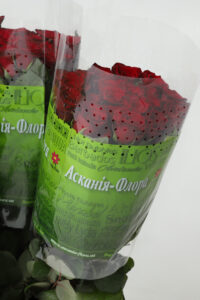
Flowers are “living” and moisture can build up during transport. If you see fogging or excess humidity inside the sleeve, ventilation can help.
-
perforation 1 mm (hot perforation) — neat and almost invisible;
-
perforation 4–5 mm (euro / cold) — stronger local ventilation;
-
technical holes 8 mm — for enhanced airflow and moisture release. In a cone bag: up to 4 holes.
This is especially relevant for wholesale, where bouquets travel in boxes/racks through longer supply chains.
Flap / notch on flap (for wholesale speed)
A flap helps when working with stacks of sleeves: it’s easier to fasten, sort, and handle packs. In wholesale operations this saves seconds per bouquet — which becomes hours over a shift.
Printing on cone sleeves: when it pays off
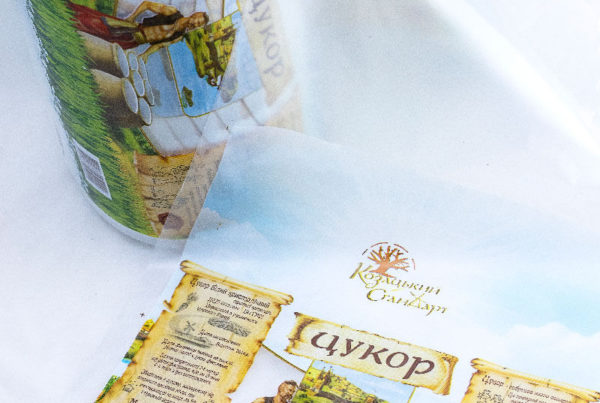
Branding on flower packaging often delivers fast ROI: customers remember the store/studio and come back. Artha-S offers flexographic printing up to 8 colors (printing usually requires a surface activation/corona treatment).
What florists should print:
-
logo + name (recognition);
-
seasonal patterns (Spring, Mother’s Day, wedding season);
-
QR code to Instagram/catalog;
-
a short care message (1–2 lines).
Artha-S technical capabilities
-
Perforation: 1 mm (hot) and 4–5 mm (euro).
-
Printing: up to 8 colors, material width for printing approx. 300–1200 mm.
-
Cone bags: BOPP/CPP, optional perforation/hole punching, open or sealed bottom.
Ordering terms
Minimum order benchmarks:
-
clear cone bags — from 20 kg
-
printed cone bags up to 6 colors — from 200 kg
-
printed cone bags over 6 colors — from 300 kg
Lead time guideline: from 14 days (sometimes faster depending on workload and specifications). Final terms are confirmed by the manager for your exact task.
Table: bouquet type → cone size → film/thickness → options
| Bouquet type | Cone size (reference) | Material + thickness | Options |
|---|---|---|---|
| Tulips (bunch/wholesale) | medium top, narrow bottom, medium height | BOPP, 25–35 µm | light perforation if needed |
| Roses | wider top, greater height | BOPP, 30–40 µm | 1 mm perforation if fogging occurs |
| Mixed bouquets | wide top, medium/narrow bottom | BOPP or CPP, 35–40 µm | perforation + printed pattern |
| Potted flowers/plants | cone with height reserve | BOPP/CPP, 35–40 µm | sealed bottom 8/10/15 cm, 8 mm holes (up to 4) |
Checklist: what data is needed for a quote
To choose the right cone sleeve and avoid overpaying for “extra film”, prepare:
-
flower type (tulips/roses/mix/potted)
-
stems per bouquet / bunch density
-
stem length
-
approximate bouquet diameter/volume
-
logistics: local or long-distance, transport time
-
do you need a sealed bottom (for pots)?
-
do you need printing (how many colors, what to print)?
-
do you need holes/perforation (what problem do you see — fogging, moisture, “greenhouse effect”)?
FAQ
1) What thickness is best for tulips and roses?
As a practical reference: tulips often work well with 25–35 µm, roses usually with 30–40 µm. For tougher logistics (boxes, long-distance transport), stay closer to 40 µm.
2) Do flowers need perforation?
Not always. But if you see fogging inside the sleeve or moisture on petals after delivery, perforation (1 mm or 4–5 mm) or 8 mm technical holes can help release moisture.
3) When do you need a sealed bottom?
When packaging potted plants or when you need stability and clean transport. Typical seals: 8/10/15 cm.
4) What are the minimum order quantities for clear vs printed cones?
Clear cones — from 20 kg. Printed up to 6 colors — from 200 kg. Printed over 6 colors — from 300 kg.
5) Can I order samples?
Yes — and it’s the smartest step before a full run. Samples help confirm the exact size and thickness for your bouquets.
Summary
The right film + thickness + cone size means fewer damages, faster packing, and better-looking bouquets on the shelf. In wholesale terms: less waste and more sales.