Why greens “swim” and flowers quickly lose their look
If you pack dill, parsley, salads, or microgreens, you know the scenario: in the morning the product looks “fresh from the garden,” and by evening there are droplets inside the pack, the leaves darken, slime and odor appear. With flowers the story is similar, but the “symptoms” differ: the bud looks tired, the leaves wilt, moisture accumulates in the pot under the sleeve, and the packaging itself loses its neat appearance.
What’s happening inside? The product breathes and releases moisture. When the film is “deaf” (no ventilation), the vapor can’t escape — it settles on the walls as condensation. That’s the same greenhouse effect that speeds up spoilage of greens and ruins the shelf appearance of flowers.
The takeaway is simple: for greens and flowers, what’s often critical is not extra barrier properties, but controlled ventilation. And this is where perforation becomes one of the most effective tools.
What is film perforation?
Perforation is the creation of holes in the film to enable airflow inside the package. It can be:
-
hot (microperforation) — holes are made with a heated needle;
-
cold (macroperforation / Euro-perforation) — holes are formed with cutting tools.
 Why does business need it?
-
removes excess moisture → less condensation
-
helps the product “breathe” → less wilting
-
stabilizes shelf quality → fewer write-offs and claims
That’s why perforated film for greens and ventilated packaging for flowers can deliver a visible improvement even without changing logistics.
Microperforation (hot): when you need it and why it works
Microperforation is gentle ventilation for products that actively “breathe” but don’t like drying out.
Technical detail: hole diameter 1 mm (hot perforation). It’s like “micro-ventilation” across the film: moisture exits gradually, and you don’t get a tropical climate inside.
Best for
-
greens (dill, parsley, mint, basil),
-
salads and some vegetable items where humidity balance matters,
-
microgreens (especially when stable appearance on the shelf is critical).
Extra advantage for CPP
If you use CPP film, it has a strong edge: CPP can be microperforated in a way that allows packing the product while it’s still warm (when your packing process cannot fully “cool” the product). This reduces the risk of condensation right after packing and helps prevent a “foggy” shelf.
Key point: microperforation is not “holes for the sake of holes” — it’s microclimate control inside the package.
Macroperforation / Euro-perforation (cold): when you need “bigger holes”
Macroperforation means larger holes that create more intense airflow. In practice, it’s often used as Euro-perforation.
Technical detail: hole diameter 4–5 mm (cold perforation / Euro). This is a “fast exit” for moisture and air — useful when the product releases a lot of moisture or when packaging must ventilate more actively.
Best for
-
flowers (especially potted and seasonal items),
-
products where stronger ventilation is needed (without going into other categories).
In simple terms: film with 4–5 mm holes is for cases where you need more air and quicker moisture release.
Technical holes in bags: when you need maximum airflow
Sometimes even macroperforation isn’t enough — for example, when there is a lot of moisture (pot + soil), or when products are tightly packed in boxes and “steam” due to temperature swings.
Then 8 mm technical holes come to the rescue — dedicated holes for air and moisture release.
Quantity limits:
-
flat bags — up to 8 holes (8 mm),
-
cone bags — up to 4 holes (8 mm).
For potted flowers this is especially practical: moisture from the soil escapes, the bag doesn’t “fog up,” and the plant looks fresh longer. For greens, it’s an option when stronger ventilation is required (e.g., intensive logistics or warm display conditions).
Which materials can be perforated — and what to choose
Perforation is the tool; the film material is the “base” that determines looks, strength, and barrier.
BOPP
BOPP is about clarity, gloss, and barrier properties. For flowers and greens, BOPP is often chosen when you want a strong shelf “wow effect” and a premium look. Available options: clear, white, pearlized, metallized, matte.
If sealing is required, choose heat-sealable BOPP (while cone sleeves often use BOPP without a heat-seal layer depending on the task).
CPP
CPP is more flexible and durable — great when you need “give” and stability. Important: CPP supports microperforation well and tolerates heat load better (useful if packing isn’t perfectly “cold”).
PE (LDPE/HDPE)
PE is about strength and moisture protection. When the main risk is moisture plus mechanical stress (transport, boxes, pallets), polyethylene solutions can be a good fit — and perforation/holes help prevent a greenhouse effect.
How to choose the right perforation
Here’s a practical 5-step checklist that works in real production:
-
What are you packing?
Greens (high moisture) or flowers (delicate + visual presentation)?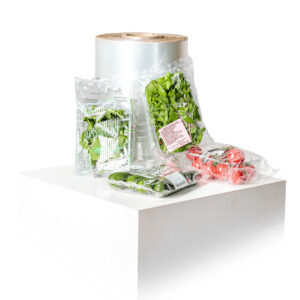
-
Where does the product sit?
Refrigerated / room temperature / “same-day” logistics. -
Is condensation likely?
Temperature swings = condensation is almost guaranteed → ventilation becomes critical. -
What format?
Roll stock (HFFS/VFFS), flat bag, cone bag. -
Which perforation type is needed?
-
micro 1 mm — gentle ventilation (often for greens)
-
Euro 4–5 mm — stronger airflow (often for flowers)
-
technical 8 mm holes — maximum ventilation in a bag (when moisture is high or logistics are difficult)
This approach helps you achieve packaging for greens with minimal condensation (or significantly reduced) and stable shelf appearance for flowers.
ARTHA-S capabilities and parameters
ARTHA-S performs film perforation and can select solutions for roll stock and bags.
-
Hot perforation (micro): film width 250–1000 mm, hole diameter 1 mm, up to 4 lanes.
-
Euro-perforation (cold): film width 230–500 mm, hole diameter 4–5 mm.
-
Printing: flexo printing up to 8 colors — when you need “packaging that sells” (brand, instructions, seasonal designs).
Commercial terms
-
Clear perforated film — minimum order from 50 kg.
-
Clear film with Euro-perforation — minimum order from 50 kg.
-
Alternative: clear film without perforation — from 20 kg.
Conclusion
Perforation is a simple but very “profitable” tool: it reduces write-offs, levels out shelf quality, and helps preserve the marketable look of greens and flowers. Most importantly, it gives you control over the microclimate inside the package, instead of a condensation lottery.