Packaging for Greens, Herbs, Bread, and Grains: How to Choose the Perfect Solution for Your Product
Packaging is part of the product — not just “a bag.” The right film and format determine freshness, shelf appeal, shelf life, and even the return on your investments in growing and production. Greens need to “breathe” and release moisture so condensation doesn’t build up and spoilage doesn’t start. Bread requires moisture control and protection from the “greenhouse effect,” which can lead to mould or drying out. Grains require a strong barrier against moisture and odours, as well as durability during logistics. The wrong material or format quickly eats into your margin: the product loses its marketable appearance, defects increase, and returns from the shelf grow.
Below is a quick ARTHA-S decision map for greens, herbs, bread, and grains — easy to adapt to manual packing, VFFS/HFFS lines, and your branding requirements.
Materials Used for Packaging Greens, Bread, and Grains
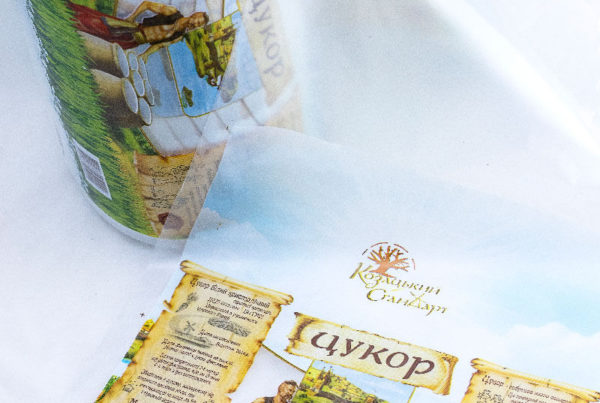
BOPP (biaxially oriented polypropylene). A “crisp,” highly transparent film with strong gloss and excellent shelf presentation. It offers good barriers against moisture and foreign odours, works well with flexographic printing, and comes in multiple options: clear, white, pearlescent, metallised, matte. Ideal when shelf appearance, print clarity, and strength at low thickness matter.
CPP (cast polypropylene). A more elastic, “soft-crinkle” film with high transparency and good resistance to fats/acids. Performs well where flexibility and strong seals are needed, sometimes with additional heat resistance. Compatible with printing and lamination; can be used as a mono-material or as part of multilayer solutions.
Polyethene (LDPE/HDPE). Strong, impact-resistant, with low water permeability. A classic choice for bread bags (with controlled ventilation) and for some grain applications where strength and cost-efficiency are key. Handles load well and can be produced in a wide thickness range.
Important: The optimal thickness and the best material combination for your product (moisture level, filling weight, line type) are selected by ARTHA-S managers after a short brief and tests on your line.
Packaging for Greens and Herbs: Why Perforation Is Essential
Storage specifics for fresh greens
Lettuce, arugula, dill, parsley, and microgreens “breathe” and release moisture. Without controlled air exchange, condensation forms inside the pack, accelerating rot and mould. At the same time, greens must not dry out — the goal is balance: ventilation + protection from contamination and dehydration.
Perforated film for greens
Perforation is a system of micro-holes in the film that provides controlled airflow. It can be hot (holes formed with a heated needle), cold (mechanical tools), and produced in different diameters (including microperforation). Correctly calculated perforation:
- reduces condensation inside the bag;
- extends freshness and shelf appearance;
- lowers the risk of rot and mould.
Packaging formats for greens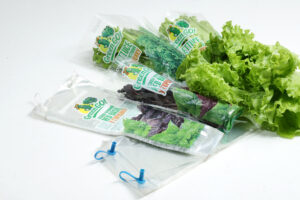
ARTHA-S offers solutions for any packing process:
- Cone bags made from BOPP — for bunch herbs and salads; optional sealed bottom for potted greens (convenient for transport).
- Flat/straight packing bags — for chopped greens and salad mixes (tray + bag or “pillow” pack).
- Perforated roll film for VFFS/HFFS — stable performance on automated lines with controlled ventilation.
Options tailored to your product:
- selecting bag size for bunch weight or tray dimensions;
- technical ventilation holes 8 mm (4–8 holes depending on format) to release steam;
- flexographic printing up to 8 colours: logo, brand, date/ingredients, QR, promotions.
Example: If you pack arugula 75–125 g into a tray, we recommend clear BOPP with microperforation plus 8 mm technical holes at the ends. For dill/parsley bunches — BOPP cone bags with a sealed bottom (pot/water) plus optional holes.
 Bread Packaging: Keeping It Soft Without Creating a “Greenhouse”
Typical problems
A “fogged” loaf, mould on day two, overly hard crust or, conversely, a damp one. The cause is usually the wrong film or missing proper ventilation: steam can’t escape, a “greenhouse” forms, and microflora multiply faster.
Films suitable for bread
- Clear BOPP — when shelf presentation and print/label readability are important.
- LDPE/HDPE bags — strong and cost-effective, handle loads well.
- 8 mm technical holes are critical to release steam after baking/cooling.
Bread bag formats from ARTHA-S
- Straight/flat bags (with optional bottom gusset for larger loaves to increase volume and help the pack stand).
- Technical ventilation holes.
- Reinforced seal — when logistics load is high or packing speed is intense.
Example: For sliced soft bread 400–600 g — a PE bag with 4–6 technical holes of 8 mm. For baguettes — clear BOPP with holes on both sides and a bottom gusset for better shelf stability.
Grain Packaging: Focus on Barrier and Shelf Appeal
What matters for grains
Protection against moisture and foreign odours, strength (to avoid tears during transport), and strong shelf presentation (clear or partially clear “window” + branding).
ARTHA-S solutions for grains
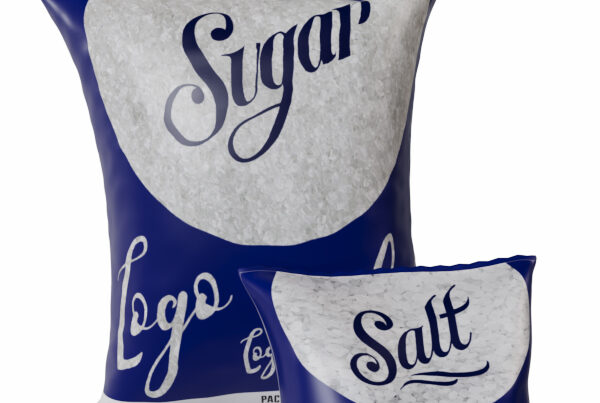
- Polypropylene bags (BOPP/CPP) — high transparency and gloss, excellent shelf look, full flexographic printing up to 8 colours, and optional lamination (to increase barrier/rigidity).
- Flexible roll packaging — mono- or multilayer films for vertical/horizontal machines; easy design updates for promos, SKUs, private label.
In practice: For 800 g or 1 kg rice — BOPP with a window + 6–8 colour printing. For buckwheat 400–800 g — mono-layer BOPP or BOPP+CPP laminate, depending on barrier/strength requirements.
Additional Packaging Options: When the Pack Sells for You
Extra features for bags
- Bottom gusset — adds volume and stability (useful for large loaves or potted greens).
- Technical holes (8 mm) — for releasing air and moisture (bread, greens).
- Euro slot (hang hole) — for retail hook display.
- Reinforcing tape — strengthens the euro slot to prevent tearing.
- Closure flap — fast closing, convenient for staff (adhesive strip/clip), reduced contamination.
- Reinforced seal — for heavy packs or intense logistics.
Printing on packaging
ARTHA-S uses flexographic printing up to 8 colours: logo, brand blocks, ingredients, recipes, QR codes, promotions. Packaging is your free shelf advertising: recognition, differentiation, and higher conversion into purchase.
ARTHA-S Technical Capabilities and Minimum Order Volumes
We work with both narrow “streams” and wide rolls; we slit rolls to your line specs, make perforation (hot, euro holes), and lamination (as a service via partners). We match solutions for manual packing, semi-automatic, or fully automatic lines (VFFS/HFFS).
Minimum orders (guidelines):
- clear film — from 20 kg;
- clear film with perforation — from 50 kg;
- straight clear bags — from 20 kg;
- printed bags — from 100 kg.
Final parameters (thickness, web/bag width, number and diameter of holes, printing type) are confirmed after a brief test run.
Why Choose ARTHA-S for Packaging
- 20+ years in flexible packaging for food products.
- In-house capabilities: flexographic printing, perforation, slitting, bag manufacturing.
- Custom selection of material/thickness/format for greens, bread, and grains.
- Minimum batches — convenient for both farmers and large producers.
- Delivery across Ukraine.
Leave a request on artha-s.com, message us, or call — and we’ll propose the best solution for your product and packing line (send samples, calculate perforation, and match a design for your brand).