Herb packaging: smart solutions for freshness and branding
Fresh herbs are one of the most delicate categories in retail: they wilt fast, lose aroma, and can become slimy or dark if the pack traps too much moisture. That’s why herb packaging is not “just a bag” — it’s a tool that manages humidity and airflow, protects herbs in transport, and helps your product stand out on the shelf. With the right film, perforation pattern, and format, you can deliver herbs that look fresh, smell fresh, and sell faster.
Why is packaging for herbs different from other produce
Fresh herbs behave differently from most vegetables. After harvesting, they continue to respire активно: they release moisture and CO₂ and react quickly to temperature changes. Two typical mistakes lead to losses:
-
Too little ventilation → condensation builds up, a “greenhouse effect” appears, leaves get wet, aroma degrades, and spoilage accelerates.
-
Too much ventilation or wrong film → the product dries out, becomes limp, and loses the “just-picked” look and fragrance.
The goal of fresh herbs packaging is balance: protection + controlled “breathing” + moisture control. This balance depends on the film type, thickness, and—most importantly—perforated film for herbs with the correct hole diameter, count, and layout.
Materials for herb packaging
BOPP — the clear, “crispy” standard for herbs
BOPP is a transparent, glossy, slightly “crispy” film with strong shelf appeal and good mechanical strength. It’s a top choice for retail presentation because consumers can see the product clearly — and visibility drives trust and sales. For many projects, BOPP herb packaging is the most practical “default” option.
Key benefits for herbs:
-
Excellent transparency for premium shelf presentation
-
Good moisture and odor barrier to protect aroma and reduce external influence
-
High strength at lower thickness (tear resistance without “heavy” film)
-
Optional heat-seal layer for reliable sealing and stable packs
-
A perfect base for branded herb packaging with flexographic printing
CPP — flexible film for more demanding solutions
CPP is flexible, slightly “rustling,” durable, and highly transparent. It is resistant to acids and fats and tolerates higher temperatures compared to many alternatives, which matters for certain packing workflows.
Typical uses:
-
lids and flow-wrap films for salad mixes and microgreens
-
projects where elasticity + durability is critical (transport, stacking, higher line speeds)
PE (LDPE/HDPE) — utility films for special tasks
PE films are impact-resistant, tough, water-resistant, inert, and neutral in smell and taste. For herbs, PE is usually used in specific formats (transport bags, simple retail solutions) and most often combined with ventilation to avoid the “greenhouse effect.”
Bottom line: Artha-S helps you select the material and thickness based on product type, required shelf life, and logistics — not “one film for everything.”
Perforation: letting herbs “breathe” without losing quality
What perforation is — and why herbs need it
Perforation means small holes in a film that enable:
-
controlled airflow
-
removal of excess moisture
-
reduced condensation
In practice, perforated film for herbs is one of the strongest levers to improve freshness, aroma, and shelf appearance. Artha-S works with both:
-
hot perforation (heated pins/needles)
-
euro perforation / die-cut perforation for specific hole sizes and shapes when needed
Microperforation vs technical holes
Not all holes work the same. Two common approaches cover most herb projects:
-
Microperforation film: many small holes for delicate, controlled ventilation — ideal when you need gentle airflow without drying out the product.
-
Technical holes (~8 mm): fewer but larger holes for stronger ventilation and moisture removal — typical for herb bouquets and packaging for potted herbs, where moisture can be higher.
The perforation pattern affects:
-
shelf life and shrink reduction
-
aroma retention (no “stale” or “swampy” smell)
-
the absence of large condensation drops on the inner surface
 Finding the “golden middle” for each herb
A practical way to think about it:
-
Tender baby leaves (salad mixes, delicate greens) need a softer airflow → microperforation is usually the safer direction.
-
Dense bunches (parsley, dill, cilantro) often need stronger moisture release → technical holes or a stronger perforation pattern can work better.
-
Cold chain vs warmer handling: the warmer the packing/handling, the more important ventilation becomes to prevent fogging and condensation spikes.
Artha-S can recommend a perforation scheme (diameter + count + placement) based on your herb type, pack weight, and packaging line.
Packaging formats for fresh herbs
Cone bags for herbs in bunches and “bouquets”
A cone (trapezoid) bag is a popular solution for bunch herbs because it presents herbs like a bouquet — clean, premium, and easy to merchandise. It’s also one of the most recognisable formats for retail herbs, which makes cone bags for herbs a strong option for shelf differentiation.
Typical parameters to customise:
-
top width, bottom width, height
-
film thickness
-
sealing options, perforation layout, and printing
Cone bags with sealed bottoms for potted herbs
For packaging for potted herbs, a sealed bottom keeps the pot stable and prevents soil or water from leaking. A sealed bottom (commonly 8/10/15 cm depending on the pot) makes transport cleaner and the shelf display more professional, especially for retail chains.
Benefits:
-
stable standing position in the store
-
less mess during logistics
-
better perceived quality at the point of sale
Flat/straight bags for chopped herbs and salad mixes
Flat polypropylene bags (often BOPP) are rectangular packs with strong side seals and high clarity. They are widely used for:
-
chopped herbs (30–50 g formats)
-
salad mixes and baby leaves
-
microgreens and culinary blends
Available options:
-
technical holes (up to 8 holes per bag)
-
reinforced seals for heavier packs
-
bottom gusset when a more stable pack is needed
Flexible roll stock for automatic packaging lines
Artha-S supplies flexible roll packaging for vertical and horizontal machines:
-
single- or multilayer films
-
printed or unprinted
-
tailored for stable performance on automated lines
Advantages of herbs:
-
consistent film quality and predictable line behaviour
-
high packing speed and scalable supply
-
branding directly on the film
-
Reduced logistics and storage costs due to low material weight
Practical if/then examples
-
If you pack 30–50 g of chopped herbs → choose a flat BOPP herb packaging solution with microperforation for controlled ventilation and a clean shelf appearance.
-
If you sell premium potted herbs → a printed cone bag with a sealed bottom + optional euro hole for hanging displays can upgrade shelf presence immediately.
-
If you run a flow-pack line for salad mixes → CPP (or suitable BOPP with heat-seal layer) + microperforation helps reduce fogging and keeps the pack stable during transport.
Branding on herb packaging: turning film into a “silent salesperson”
Flexographic printing for herb brands
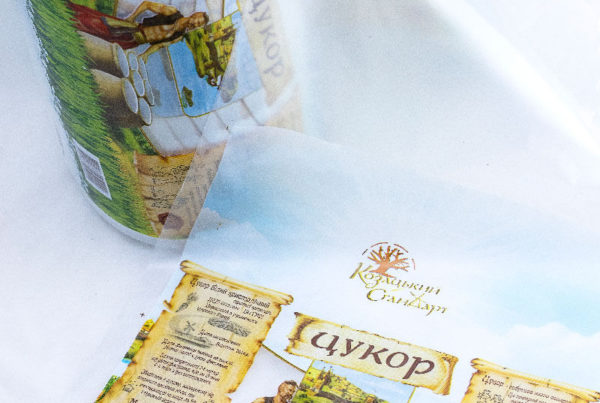
Flexographic printing is a high-speed rotary print method for flexible materials — ideal for scaling branded packs without sacrificing efficiency. Artha-S offers:
-
up to 8 colours
-
printing on BOPP, CPP, and other films
-
roll-to-roll printing for further slitting and bag-making
What you can print:
-
logo and brand identity
-
product name, origin, usage tips, storage instructions
-
QR codes, eco messages, seasonal promotions
Functional branding elements that boost sales
Beyond graphics, smart pack features support merchandising:
-
euro hole (euro slot): for hanging on hooks and display walls — useful for premium lines and cross-merchandising
-
reinforcing tape: strengthens the euro hole zone so bags don’t tear and always look neat
-
technical holes: functional for ventilation and can be integrated into the design as a “freshness feature” that the shopper understands
Well-designed custom printed herb packaging improves recognition, supports premium pricing, and encourages repeat purchases — especially for private label and retail-brand programs.
Artha-S’s technical capabilities and minimum order quantities
Here is how technical specs translate into real benefits for your project:
-
Slitting: max web width 1200 mm, up to 10 lanes, minimum lane width 40 mm → precise formats for different lines and pack sizes.
-
Perforation: hot perforation and euro perforation; common hole sizes include micro holes and larger formats (including ~8 mm technical holes) → tailored ventilation for each herb type and shelf-life target.
-
Bag making: flat and cone bags, including sealed-bottom options for potted herbs → one supplier for multiple SKUs.
Minimum order quantities (as a business advantage):
-
clear film: from 20 kg
-
clear perforated film for herbs: from 50 kg
-
clear cone bags: from 20 kg
-
printed film or bags: from 100 kg
This makes Artha-S a practical partner for both small farms and large industrial producers — from pilot batches to scaled retail supply.
Why Artha-S is a smart choice for herb packaging
Choosing the right supplier matters as much as choosing the right film. With 20+ years in flexible packaging for food applications, Artha-S combines in-house processes (slitting, hot/euro perforation, bag making, flexographic printing) with practical experience in herbs, salad mixes, and microgreens. You get solutions tailored to your product and packing line — not generic “one-size-fits-all” bags.
Tell us what herbs you pack and what line you use — and we’ll design a solution that keeps them fresh, aromatic, and shelf-ready.
Request a quote, ask for a consultation, or order a branded pilot batch from Artha-S.