Packaging for grocery products
Packaging for grocery products plays a crucial role in preserving the freshness of the product, ensuring its safety, and enhancing its appeal to consumers. High-quality packaging helps protect the product from environmental influences, protecting it from moisture, and light, and preserving the aromas and beneficial properties. Additionally, it facilitates convenient transportation and makes the products look attractive on supermarket shelves.
Market Overview of Packaging
In the current market for grocery product packaging, the primary materials are:
- BOPP Film – Biaxially oriented polypropylene film, which provides excellent transparency, gloss, and high tear resistance.
- CPP Film – Cast polypropylene film, which has high mechanical strength and elasticity, making it suitable for various types of products.
- High and Low-Density Polyethylene – Used for packaging products that require special resistance to damage and protection from moisture or for quick preparation.
Why is High-Quality Packaging Important for Grocery Products?
The main reason for choosing high-quality packaging for grocery products is to protect the products from external factors. For example, BOPP film not only has to look attractive on store shelves but also protect from moisture and foreign odors, which is essential for maintaining product quality.
Types of Packaging for Grocery Products
It’s important to understand that packaging for products like buckwheat, semolina, or pasta has different challenges and should provide various characteristics.
- Pasta Products have sharp edges, so the packaging must be puncture-resistant and, in case of a puncture, prevent further tearing.
- Semolina contains small particles, and during the packaging process, a lot of dust is generated, which in turn contaminates the packaging material and complicates the sealing process. Therefore, BOPP+CPP material is used for packaging semolina, ensuring more stable sealing.
- Buckwheat can be packed in film with a thickness of 30 microns. This is not a very demanding product.
It is also important to consider that the durability of packaging to different forms of impact increases the cost of packaging, and businesses must carefully weigh the losses from damaged packaging and product contamination against the budget allocated for packaging products.
General Recommendations for Different Types of Grocery Products
- Grains and Pasta: Buckwheat, rice, couscous, pasta, oatmeal – use options such as BOPP 40 microns; BOPP 20 microns + BOPP 20 microns, BOPP 20 microns + CPP 20 microns.
- Legumes: Beans, chickpeas, lentils – use options such as BOPP 40 microns; BOPP 20 microns + BOPP 20 microns, BOPP 20 microns + CPP 20 microns.
- Flour: Wheat, whole grain, buckwheat – use options such as BOPP 40 microns; BOPP 20 microns + BOPP 20 microns.
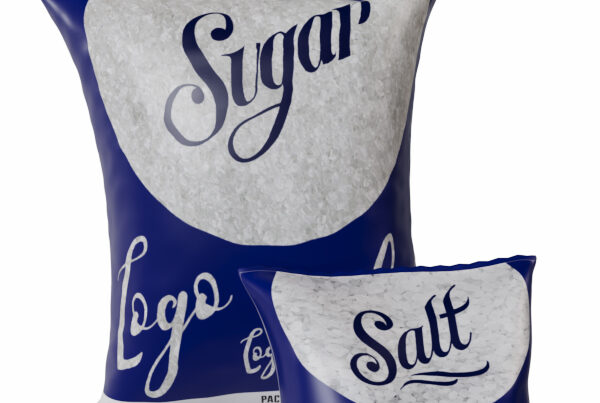
- Sugar and Substitutes: Sugar, honey, stevia – use options such as BOPP 40 microns; BOPP 20 microns + BOPP 20 microns, PET 12 + BOPP metalized 30 + PE 40 microns.
- Salt and Spices: Salt, black pepper, paprika, bay leaf – use options such as BOPP 40 microns; PE 50 microns, BOPP 20 microns + BOPP 20 microns, PET 12 + BOPP metalized 30 + PE 40 microns.
- Dried Fruits and Nuts: Raisins, prunes, walnuts, almonds – use options such as BOPP 40 microns, BOPP 20 microns + BOPP 20 microns, PET 12 + BOPP metalized 30.
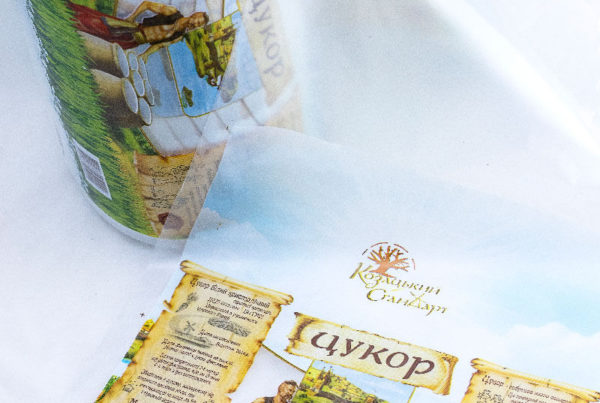
Flexible Roll Packaging with Printing and Various Film Combinations (BOPP and CPP)
This type of packaging is one of the most popular for grocery products. It is lightweight, durable, and allows for printing, making it an excellent choice for branding. Flexible packaging is also economical in manufacturing and transportation.
Transparent BOPP Film
Transparent BOPP film is used due to its versatility and low cost. It is suitable for various products, including grains, pasta, and flour, and allows for product storage without needing to adjust equipment.
Alternative Packaging Options
In addition to flexible roll packaging, other packaging types for grocery products include:
- Polyethylene Bags (LDPE and HDPE).
Sizes and Configurations of Packaging
It is important to choose the correct packaging size for each product. For example, it is optimal for grains to use packaging with a width of 300 to 400 mm and a thickness of 30 to 50 microns. This ensures reliability and convenience in transportation.
Choosing Materials for Packaging
BOPP, CPP, and LDPE are the primary materials for packaging grocery products. Each has its unique advantages:
- BOPP Film – Transparency and resistance to external influences.
- CPP Film – Ideal for products that require airtightness.
- LDPE – Perfect for products that need special protection from moisture.
These types of materials can be combined depending on the goals the packaging needs to achieve.
Specifics of Ordering Packaging
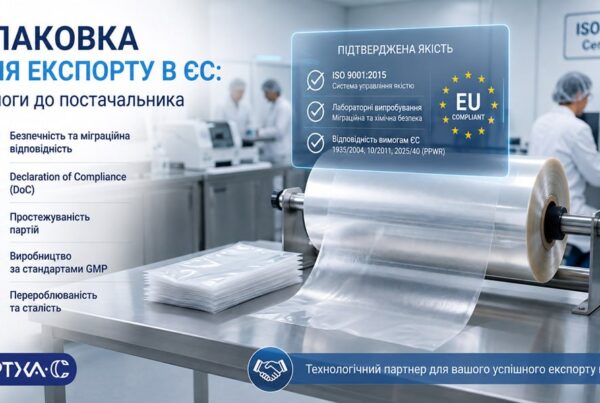
It is important to choose the right supplier, such as Artha-S, which specializes in producing high-quality packaging for grocery products. The minimum order volume depends on the type of material and can range from 20 kg of transparent film to 100 kg for printed film.
Conclusion
Packaging for grocery products is an important stage in creating a competitive product. Properly selected packaging not only protects the product but also makes it more attractive to the buyer. Companies that invest in quality materials will succeed in the market by offering their customers better solutions for product storage and transportation.